Global teaching rates
₱937–₱1,562/hourPreply advertises an average English-tutor asking rate of US$15–25/hour. This is a global price benchmark before commission, not a Philippine salary range.
Earn money online by teaching English or another subject. Compare tutoring platforms and learn how lessons, student bookings and commissions work before you apply.
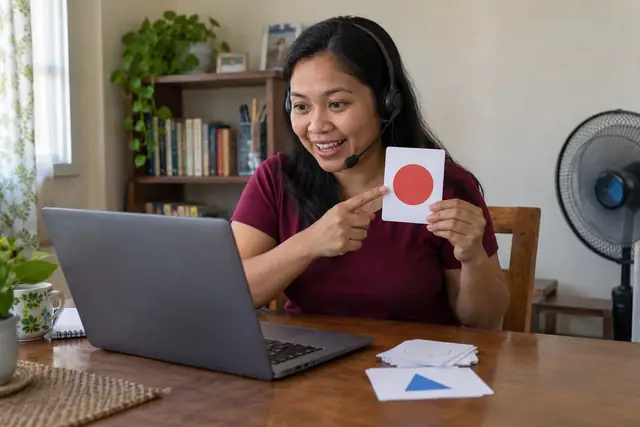
Online tutors teach a language or subject through live internet lessons. The work includes understanding a learner’s goal, preparing activities, explaining concepts and giving feedback. A platform may supply lesson materials or let you design your own. Your available timetable becomes the set of lessons students can book.
A learner wants to practise an English job interview. You ask about the target role, prepare a short interview exercise, hold the lesson and give feedback on useful phrases and recurring errors. The next lesson builds on what the learner found difficult.
Strong knowledge of the subject, clear communication, a headset or microphone, a camera where required and a quiet teaching space. Check each platform’s qualification, identity and technical requirements.
Choose what you can teach and the learner level.
Introduce yourself and complete any teaching assessment.
Offer hours you can consistently attend.
Explain, practise together and give useful feedback.
Track completed lessons and deduct platform charges.
A tutor’s advertised rate is only the first part of the calculation. Booked paid lessons, commission and preparation determine what you keep.
Preply advertises an average English-tutor asking rate of US$15–25/hour. This is a global price benchmark before commission, not a Philippine salary range.
Forty paid non-trial hours at US$15 bring US$600 in lesson billings. After Preply’s initial 33% commission, US$402 remains. Preparation, unpaid trial lessons, withdrawal costs and tax still need to fit your plan.
US-dollar examples use ₱62.485 per US$1, the BSP reference for 30 September 2026.
An illustration of platform fees only, not an income forecast.
Requirements differ by platform and subject. Check the individual tutor application criteria before buying a course. A language conversation role and a specialist academic tutoring role may ask for different qualifications.
Explain who you teach, the goals you help with and your relevant experience. Preply’s registration process includes profile information and an introduction video. Make the description specific to the learners you want to reach.
Ask about the learner’s goal and current difficulties. Prepare a short activity to see their level, plus one achievable task. Leave time to explain the next steps rather than filling every minute with a lecture.
Open slots are not the same as booked lessons. Track paid teaching time separately from preparation, gaps and messages. Check how the platform handles trials, cancellations and student absences.
Account for lesson length, preparation, commission and payout costs. Compare tutors teaching similar subjects and levels. A one-hour lesson may require more than one hour of your working time.
Test sound, camera, screen sharing and connection stability in the actual room you will teach from. Keep materials open and know the platform’s support process for connection problems.
Choose platforms and students whose schedules match yours. Offer a small number of reliable slots first. Regular learners benefit from consistent availability and notice when your timetable changes.
Record the learner’s goals and progress, then use them in later lessons. Give specific feedback and a manageable practice task. Explain how the next session connects to what they want to achieve.
First check what the platform provides and the rules for using it. Adapt appropriate materials to the learner’s needs. Use content you created or have permission to teach with.
Multiply paid lessons by the amount kept per lesson, then subtract other expenses. Build the plan from bookings you can realistically deliver. Include preparation time when comparing tutoring with another job.
At US$15 per non-trial hour and a 33% commission, about ₱628 remains per paid hour at the stated exchange rate. Roughly 32 paid hours reaches ₱20,000 before other costs and tax. You will need additional time for trials, preparation and messages, and enough students to book those hours.
Learn about the skills, earning examples and training for these roles.